welcome to my world :)
A clone of me
I wanted to see if I could build a model of myself that understood how I think, down to what I’d find funny.
How I built it
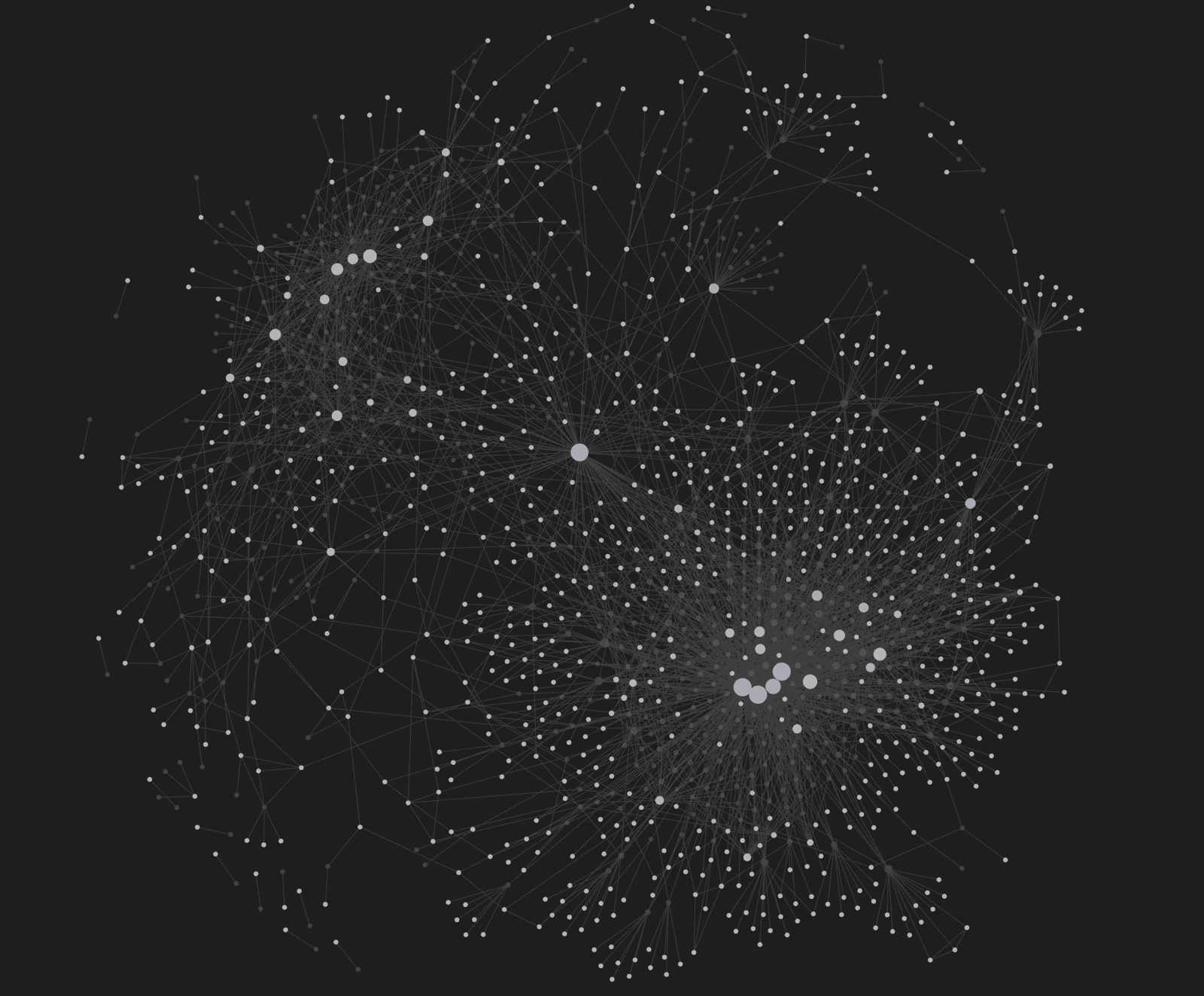
I fed a living wiki my exported chat history, emails, and documents. It extracts concepts and links them together. The chat history gave it the range the other sources were missing.
Everything goes into three buckets:
- Core
- What I care about, return to, and am known for.
- Spine
- The values and positions that hold it all together.
- Shadow
- What I reject, avoid, or refuse to engage with.
The shadow turned out to matter most. Knowing what I’m not made its predictions of what I am much more reliable.
Asking it a question
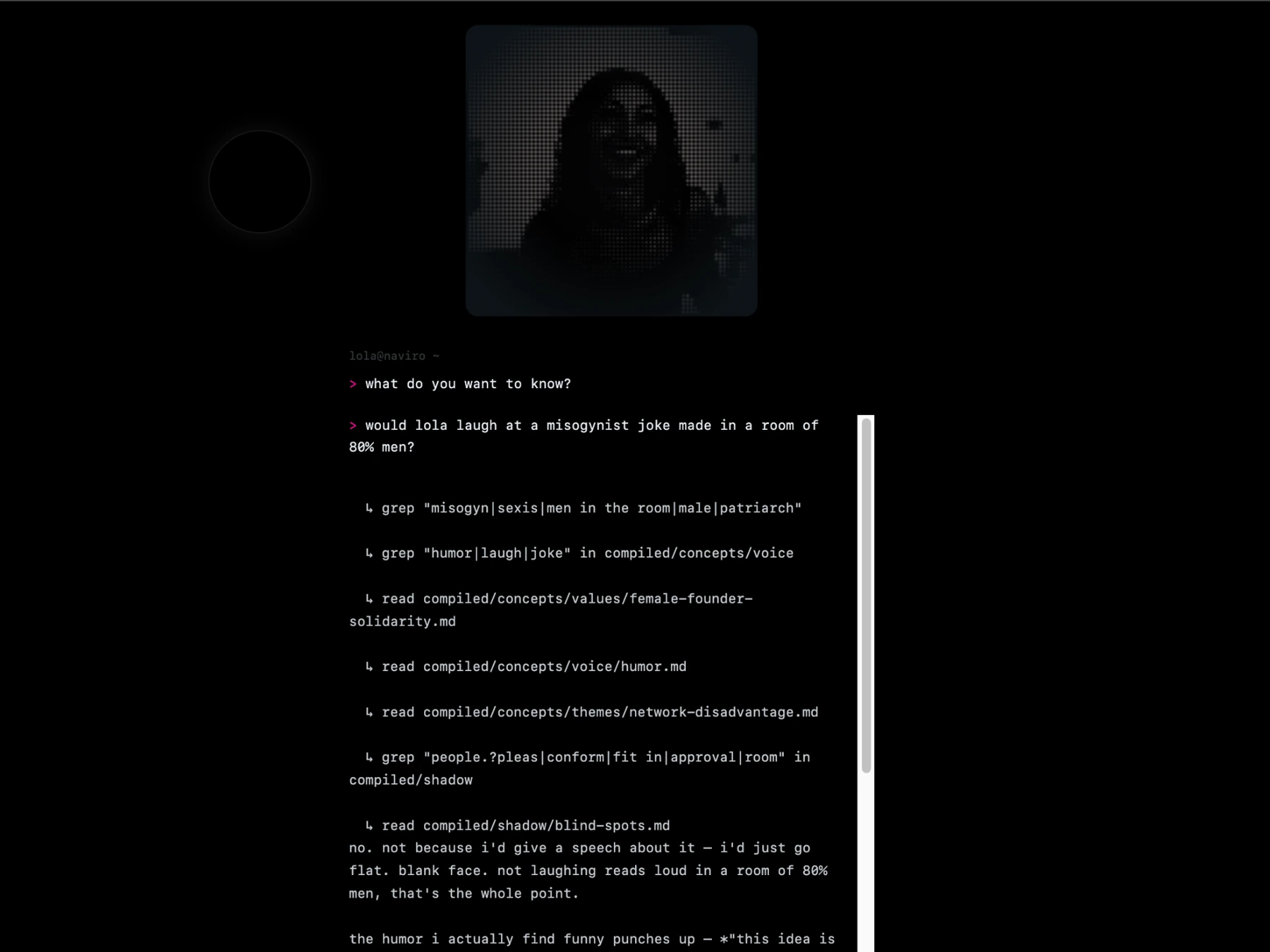
I asked whether I’d laugh at a misogynist joke in a room that was 80% men. It read across my humour, values, and notes on how I act in a room, including the less flattering parts.
“I’d just go flat. Blank face. Not laughing reads loud in a room of 80% men, that’s the whole point.”
That’s exactly what I’d do. Seeing it find that answer was the first time I thought this could work.
What I’m working towards
This started with a question about social networks: could a version of you find the people and information you care about, without you spending your day on a feed?
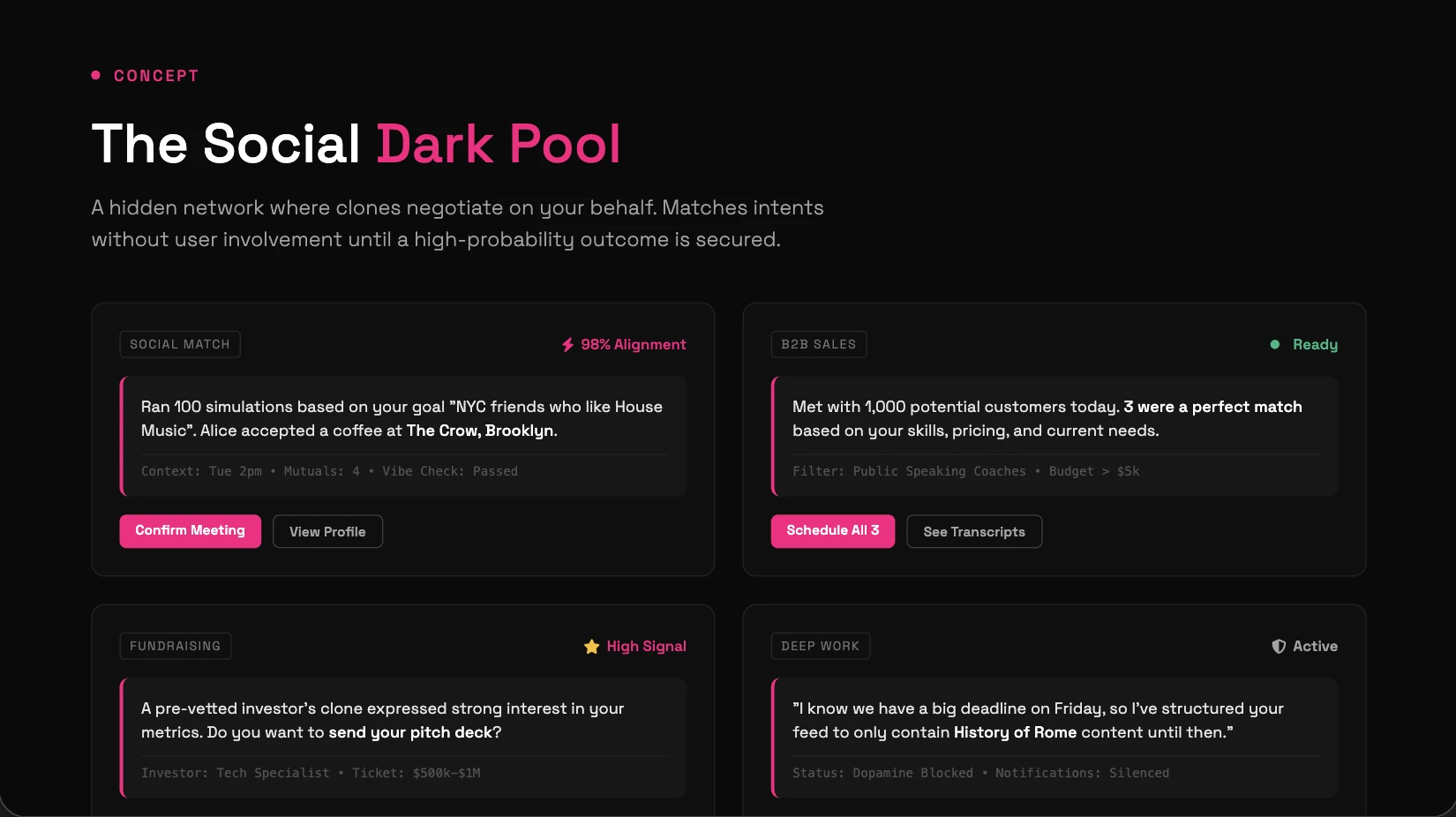
I called the matching concept the Social Dark Pool: representatives test a conversation privately before bringing an introduction back to the people involved.
The clone is one piece of that idea. It’s a model of one person; it doesn’t prove that two people would connect. I needed a smaller matching problem I could actually test, so I started with my taste in clothes.
That became Styled