welcome to my world :)
Creator analysis
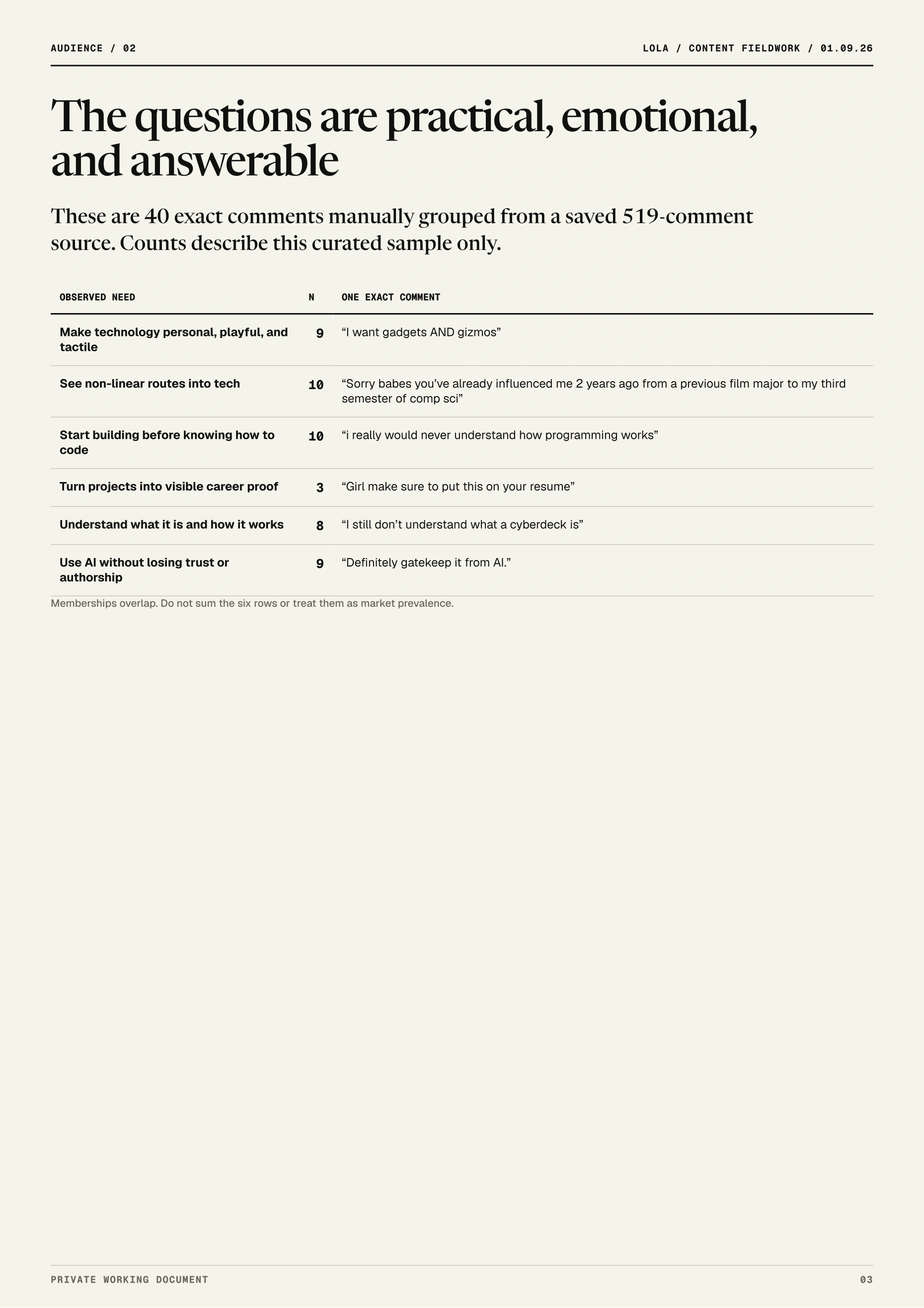
I wanted content ideas that came from watching what people actually respond to.
Inside the research
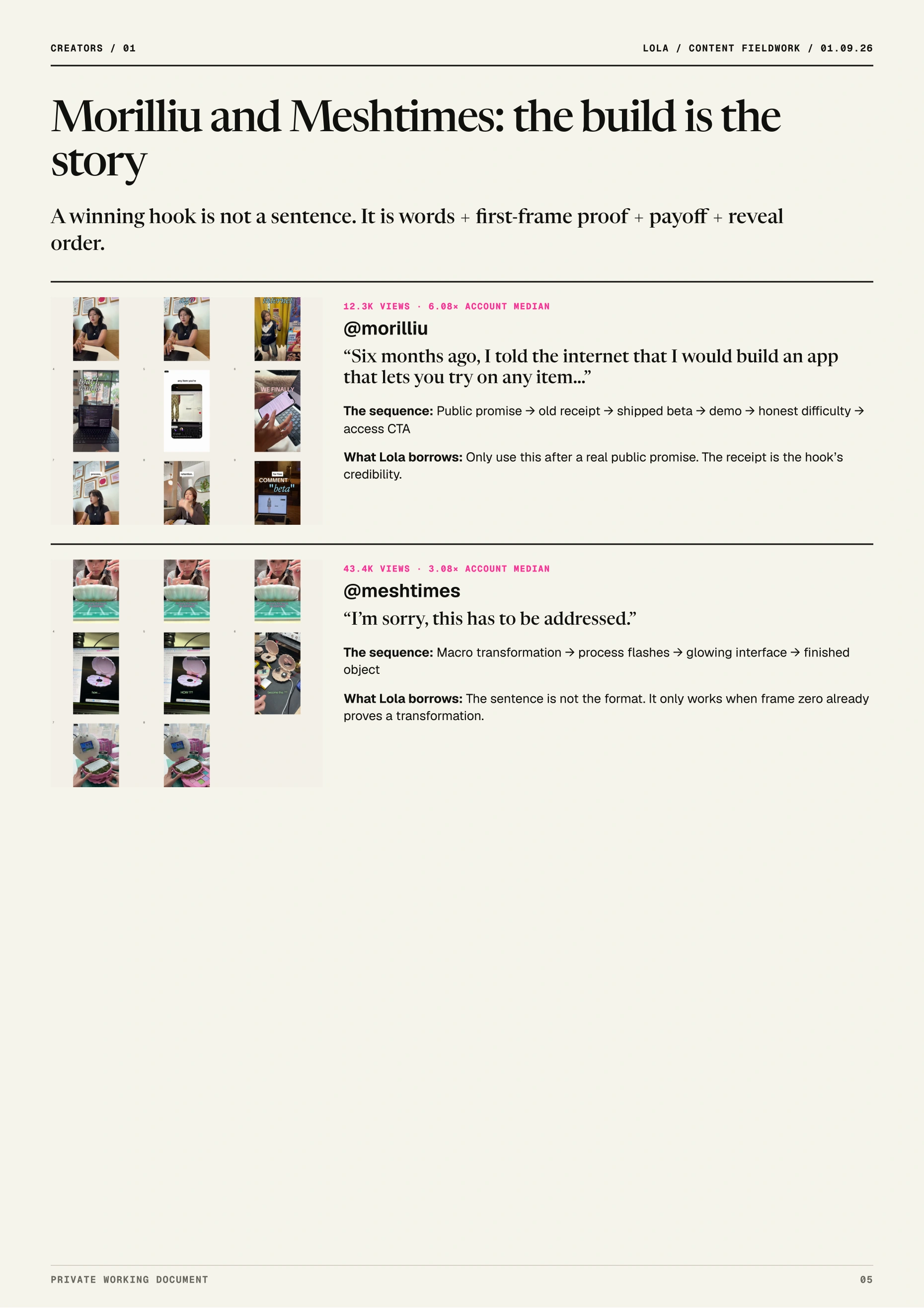
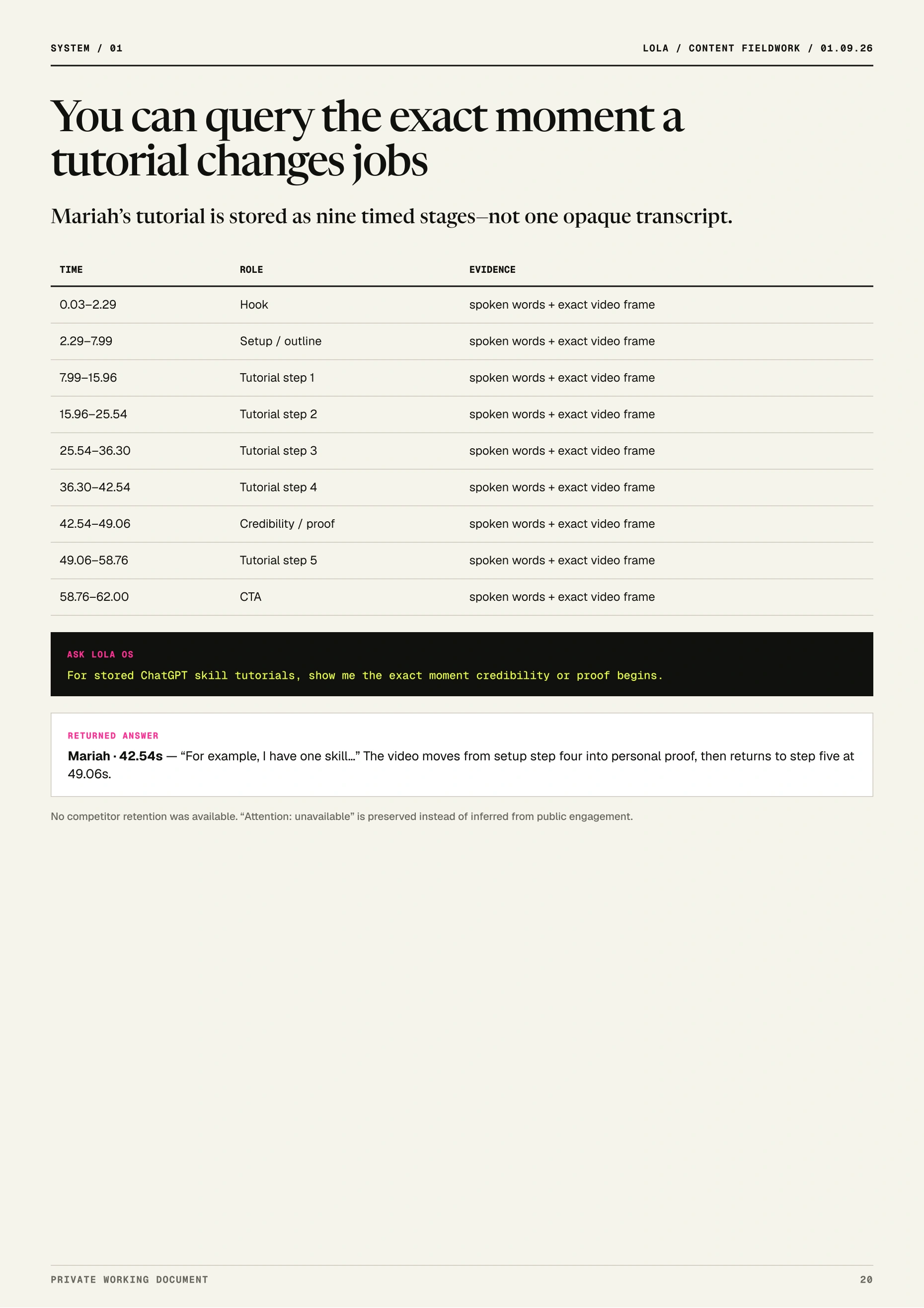
I built a system that studies creators’ videos, the words on screen, the opening, the cuts, and the comments underneath. It maps what happens moment by moment, so I can ask why an opening works and get back the source.
It also compares a post with that creator’s usual performance. A big view count alone doesn’t tell me much.
Ask about a moment
I can ask where a tutorial moves from instructions into proof, and get the exact timestamp, spoken words, and frame. The video stays connected to its evidence instead of becoming one long summary.
Public views and comments help me compare posts. They don’t tell me where viewers dropped off, and they don’t prove that an opening caused a video to perform.
From research to an idea
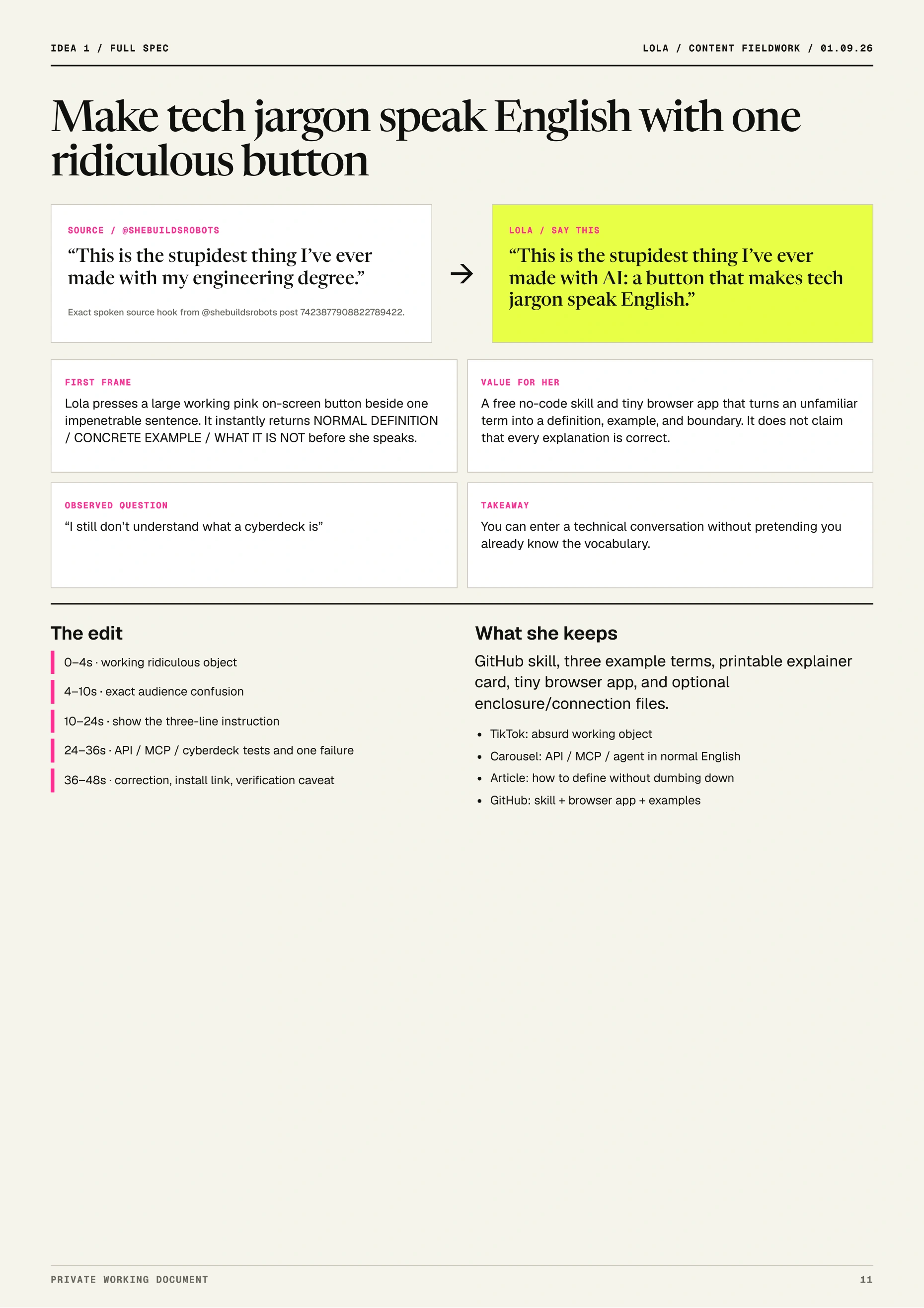
The useful part is connecting an audience question to something I can make: a small tool, a tutorial, a story, or a new way to explain an idea. Each suggestion needs a first frame, something worth watching for, and an actual result for the viewer.
This is an ongoing experiment inside Lola OS. I’m still testing which recommendations deserve to become posts.
More about Lola OS